Hockey Hair Don't Care T-Shirt Review
As a designer who has spent years navigating the intersection of digital graphics and physical thread, I approach every new asset with a critical eye. The market is flooded with generic clip art, but finding a piece that translates well from screen to stitch requires a specific kind of scrutiny. Today, I am evaluating the Hockey Hair Don t Care T-Shirt, a design categorized under Print Templates and Graphics. On paper, it promises a humorous take on ice hockey culture, specifically targeting players who enjoy a bit of on-ice debate. But does this graphic hold up when you consider the realities of embroidery, fabric tension, and customer expectations?
First Impressions: Visual Weight and Character
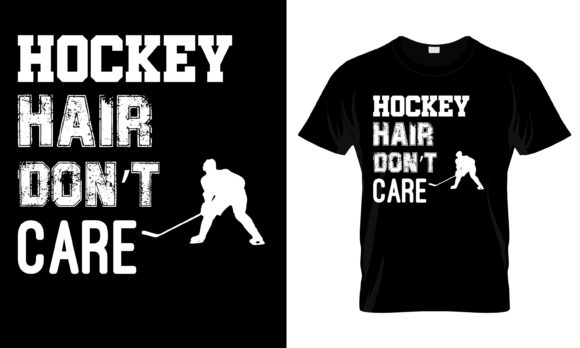
When I first opened the files for the Hockey Hair Don t Care T-Shirt, the immediate mood was playful and slightly rebellious. The concept of a player with wild hair arguing with a referee or opponent is a classic trope in sports humor. Visually, the layout appears bold, which is essential for any machine embroidery design intended for apparel. In the world of custom apparel, designs need to grab attention quickly. This graphic achieves that through its dynamic pose and clear typography.
However, as a reviewer looking at this as a potential embroidery file, my mind immediately shifts to how the lines will be converted into stitches. The high resolution mentioned in the description—4500×5400 pixels at 300 dpi—suggests that the source Graphics are crisp. This is a good starting point. A blurry source image leads to jagged edges in the final finished product. For an Etsy seller or a small shop owner, clarity is non-negotiable. If the details are muddy, the perceived value of your handmade product drops instantly.
Real-World Application: From Screen to Stitch
Let's imagine a real scenario. You are preparing a custom order for a local hockey team's end-of-season party. A client wants a personalized gift for their favorite player, someone known for being loud in the locker room. You decide to use the Hockey Hair Don t Care T-Shirt design on a heavy cotton sweatshirt. This is where the practical evaluation begins.
Sweatshirts present unique challenges due to their texture and thickness. When you hoop a fleece or heavy cotton blend, the fabric can pucker if the stitch density is too high. With a character-based design like this, you will likely rely heavily on fill stitch for the jersey and the hair, while using satin stitch for outlines and text. The "arguing" expression needs to be distinct. If the mouth or eyes are too small, they might get lost in the fabric pile. Before committing to the final garment, I always recommend testing the design on scrap fabric first. Check the thread color contrast against the dark grey or navy blue typical of hockey gear. High contrast ensures the humor lands; low contrast makes the design look like a mistake.
This design also fits perfectly into the realm of holiday embroidery gifts. Imagine a tote bag design featuring this character, filled with snacks for a game day tailgate. Or perhaps an embroidered patch sewn onto a denim jacket. The versatility of having SVG, EPS, and PNG files means you can adapt the design for different mediums. However, remember that just because you have a vector file doesn't mean it is ready for the machine. You must ensure the digitization accounts for underlay stitches, especially on textured fabrics like canvas or wool blends.
Navigating Fabric and Hoop Constraints
While the Hockey Hair Don t Care T-Shirt looks great on a standard chest placement, there are limitations you must respect. Small hoop sizes are a common pitfall. If you attempt to fit this entire scene into a 4x4 inch hoop, the details will suffer. The text "Don't Care" could become illegible if scaled down too much. Tiny lettering is a nightmare in embroidery; threads can bleed together, creating a blob rather than readable words.
Similarly, curved surfaces like caps require careful consideration. The topography of a hat distorts the stitching path. A flat design like this might look warped if not properly adjusted for the cap's curvature. I would advise avoiding this specific layout for hats unless you are willing to re-digitize it specifically for a curved surface. Instead, focus on flat applications like tote bag design projects, pillow covers, or aprons where the fabric remains stable during stitching.
Another critical factor is the fabric type. Thin, stretchy fabrics like performance jerseys are risky. The weight of the thread and the pull of the needle can cause the material to warp. If you are making baby embroidery items or lightweight summer tees, ensure you use a strong stabilizer. Without proper backing, the design might crack after the first wash. Durability is key for commercial embroidery projects where customers expect their items to last through many cycles.
Design Integrity and Business Value
For the Etsy seller or creative entrepreneur, the visual appeal of your work directly impacts buyer engagement. The Hockey Hair Don t Care T-Shirt offers a strong personality that resonates with a niche audience. Hockey fans love gear that speaks their language. By offering this as a personalized gift, you are tapping into emotional buying triggers. It’s not just a shirt; it’s a statement about their passion and attitude.
However, professionalism matters. If the thread colors clash or the stitching is uneven, it damages your brand consistency. Always create a printable mockup to visualize the final result before selling. Compare light and dark fabric backgrounds to see how the design pops. Does the white outline stand out against a black shirt? Is the red of the jersey vibrant enough? These details separate a hobbyist project from a professional small shop product.
Furthermore, verify the licensing terms before using these design assets for commercial gain. While the description mentions file formats, it does not explicitly state the usage rights for selling finished goods. As a responsible business owner, you must confirm whether you can sell the digital embroidery file itself or only the stitched items. Misunderstanding these terms can lead to legal issues that threaten your entire craft business.
Practical Designer Notes for Success
To get the most out of the Hockey Hair Don t Care T-Shirt, follow these practical steps:
- Test First: Always run a test on scrap fabric to check for puckering and alignment.
- Check Density: Ensure the fill stitch isn't too dense, which can make the fabric stiff.
- Stabilizer Choice: Use tear-away or cut-away stabilizers depending on the fabric weight.
- Color Strategy: Select thread colors that provide maximum contrast for readability.
- Licensing Check: Confirm you have the right to sell items made with this design.
- Hoop Size: Verify the design fits comfortably within your machine's hoop without crowding.
In conclusion, the Hockey Hair Don t Care T-Shirt is a fun, engaging graphic that has the potential to be a best-seller in the sports category. Its success depends entirely on your execution. By respecting the limitations of your equipment, choosing the right materials, and maintaining high standards for quality, you can turn this Print Templates asset into a profitable and cherished finished product. Whether for a holiday gift, a team uniform accent, or a boutique item, the key lies in the details. Treat the design with care, and your customers will love the result.