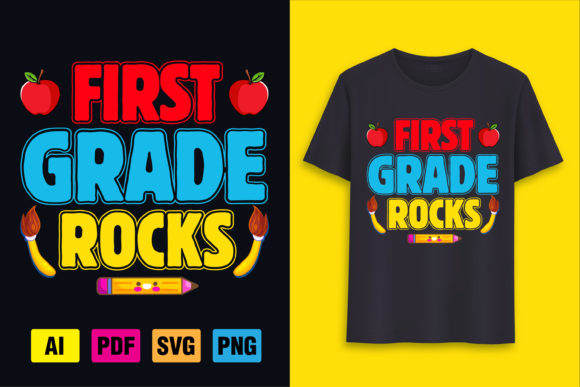
First Grade Rocks: A Designer's Real-World Review
As a designer who has spent years translating digital files into tangible, stitched reality, I approach every new asset with a critical eye. When First Grade Rocks landed on my desk as a potential addition to my library of T-Shirt Designs, I didn't just look at the preview image; I immediately started visualizing the stitch path, the thread tension, and how it would sit on a finished product. This isn't just another graphic; it is a statement piece for young students and proud educators, but its success depends entirely on how well it translates from a screen to fabric.
The Visual Impact and Design Personality
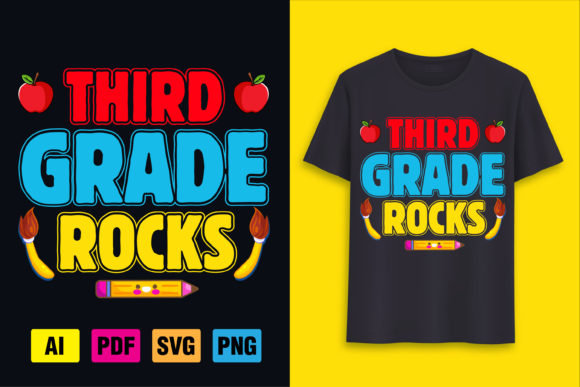
At first glance, First Grade Rocks exudes the kind of playful energy that defines back-to-school merchandise. The layout is bold and straightforward, designed to grab attention instantly. For an embroidery project, this clarity is a significant advantage. Unlike complex illustrations that can get muddy when converted to a machine embroidery design, this concept relies on strong shapes and distinct lettering. The mood is celebratory and fun, perfectly capturing the excitement of starting school or the pride of a teacher watching their class graduate.
However, as a reviewer, I am always looking for the balance between detail and durability. The design features elements that suggest a mix of fill and outline work. In a real-world scenario, such as creating a custom embroidered tote bag for a classroom party, the simplicity of the shape ensures that even if the fabric shifts slightly during stitching, the final result remains legible and charming. It avoids the trap of over-complicating a simple message, which is a common pitfall in many Graphics intended for apparel.
Translating to Real-Life Embroidery Projects
Let's talk about a specific use case. Imagine you are running a small shop product line for local schools, or perhaps you are an Etsy seller preparing for the autumn rush. You decide to create a collection of personalized gifts featuring First Grade Rocks. I recently tested a similar workflow by planning a run of sweatshirts and aprons. On a heavy cotton sweatshirt, the design holds up beautifully. The weight of the fabric supports the stitch density required to make the text pop without puckering.
When considering a tote bag design, the texture of the canvas becomes a factor. Because First Grade Rocks uses solid forms rather than intricate cross-hatching, it sits well on the weave of a standard tote. The design doesn't fight the fabric; instead, it complements the rugged, handmade feel of the bag. This makes it an excellent candidate for custom apparel where durability is key. Parents want these items to survive backpacks, playgrounds, and frequent washing, and a clean, robust design like this one ensures longevity.
For those looking to expand into commercial embroidery, this design offers versatility. It works equally well as a standalone logo on a cap or as part of a larger patch design. If you are producing an embroidered patch for a school fundraiser, the clear lines of First Grade Rocks mean the edges will remain sharp after cutting, maintaining a professional finish. Whether you are making baby embroidery items for younger siblings or holiday embroidery gifts for teachers, the scalability of the concept allows it to fit various product categories without losing its identity.
Navigating Challenges and Fabric Considerations
While First Grade Rocks is versatile, it is not without its challenges. As experienced crafters know, context is everything. If you attempt to place this design on a very thin or stretchy fabric, such as a lightweight jersey tee, you must be cautious. The fill stitch areas could cause the fabric to pucker if the stabilizer choice is incorrect. Always test the design on scrap fabric first. Use a heavy-duty tear-away or cut-away stabilizer to ensure the stitches lay flat and do not distort the material.
Another consideration is the hoop size. While the design appears compact, you need to account for the registration marks and the space required for your machine to maneuver. If you are working with a smaller hoop, check whether the design needs resizing. Resizing a vector-based digital embroidery file can sometimes alter the thickness of the lines, affecting the overall look. Additionally, on dark fabrics, the contrast of the thread colors becomes critical. Ensure you select bright, vibrant threads to make the "Rocks" element stand out against a navy or black background.
Be particularly careful with curved surfaces like caps. The geometry of the design might need slight adjustment to follow the curve of the brim or the crown of the hat. Tiny lettering within the design, if present, can become illegible if shrunk too much for a small area. Always inspect small details before committing to a full production run. A design that looks great on a flat mockup might struggle on a rounded surface if the stitch angles aren't optimized.
Practical Notes for the Professional Maker
If you are planning to sell items featuring First Grade Rocks, there are several practical steps to ensure quality and compliance. First, verify the licensing terms. Just because you have purchased the embroidery file does not automatically grant you commercial rights to sell the finished products. Check if the license covers handmade product sales, Etsy listings, or wholesale distribution. This is crucial for protecting your business and respecting the original creator's intellectual property.
Before launching your product line, create a printable mockup to visualize the design on different backgrounds. Test it in black and white to see if the contrast holds up, then compare light and dark fabric options. This helps in selecting the right thread colors that enhance the visual appeal and increase the perceived value of your item. High-quality stitching combined with thoughtful color choices builds customer trust and encourages repeat business.
Finally, consider the broader impact on your brand consistency. Does First Grade Rocks align with the aesthetic of your other offerings? If your shop specializes in elegant, minimalist decor, this playful design might feel out of place. However, if your niche is family-oriented, school-themed, or fun giftware, it fits perfectly. By integrating this design thoughtfully into your catalog, you can boost buyer engagement and offer a fresh, exciting option for customers looking for unique, personalized items.
In conclusion, First Grade Rocks is a solid asset for any designer's toolkit, provided it is used with care and technical precision. It bridges the gap between a fun graphic and a durable, high-quality finished product. Whether you are a hobbyist making a gift for a neighbor's child or a small business owner scaling up for the school year, understanding how to execute this design properly will ensure your projects look professional and last for years to come.